*Testarea si validarea platfomei SENIORS ZONE -August 2025-Buzau-Romanoa
POSTER:
AGENDA ACTIVITATII DE TESTARE A PLATFORMEI:
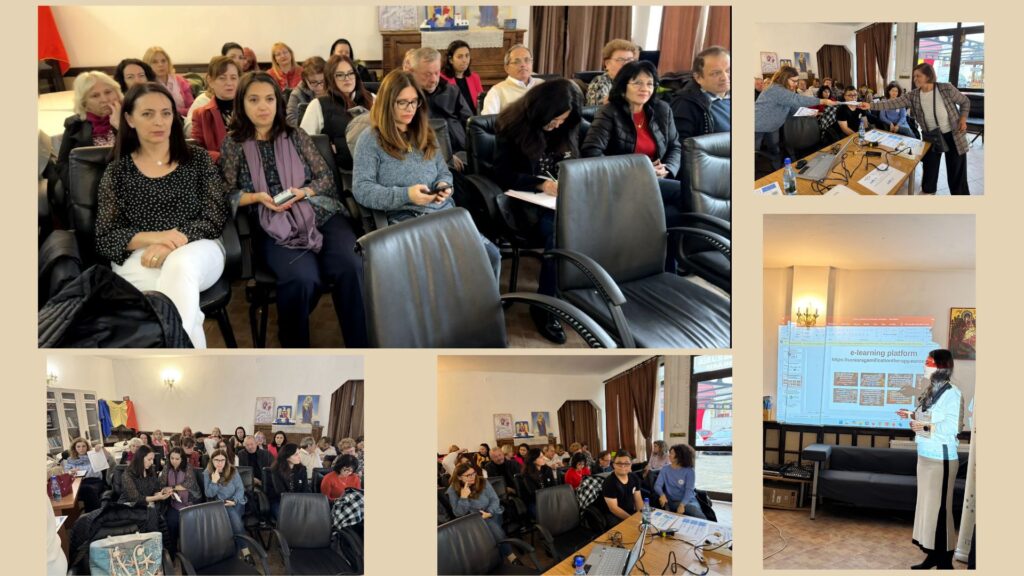
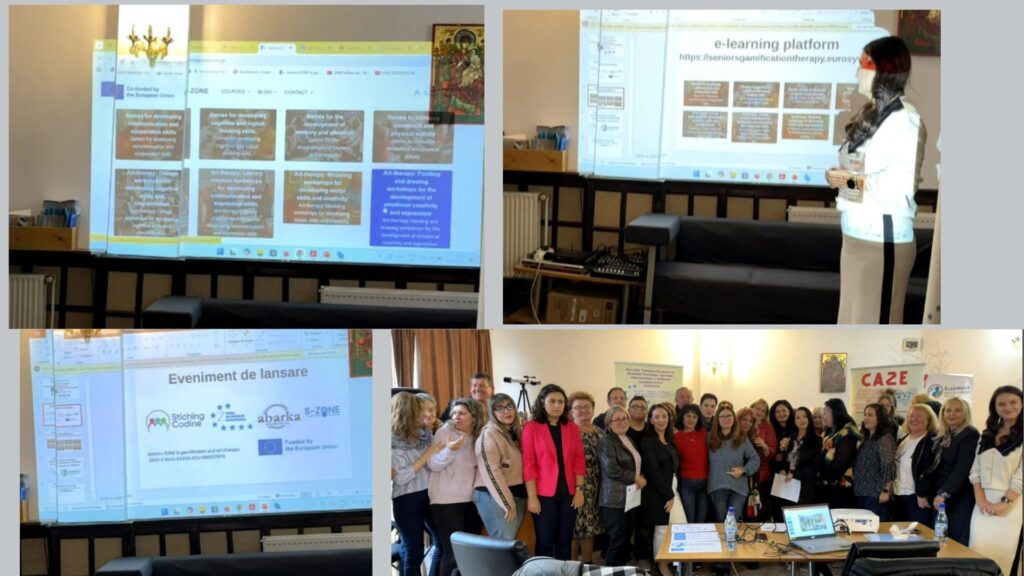
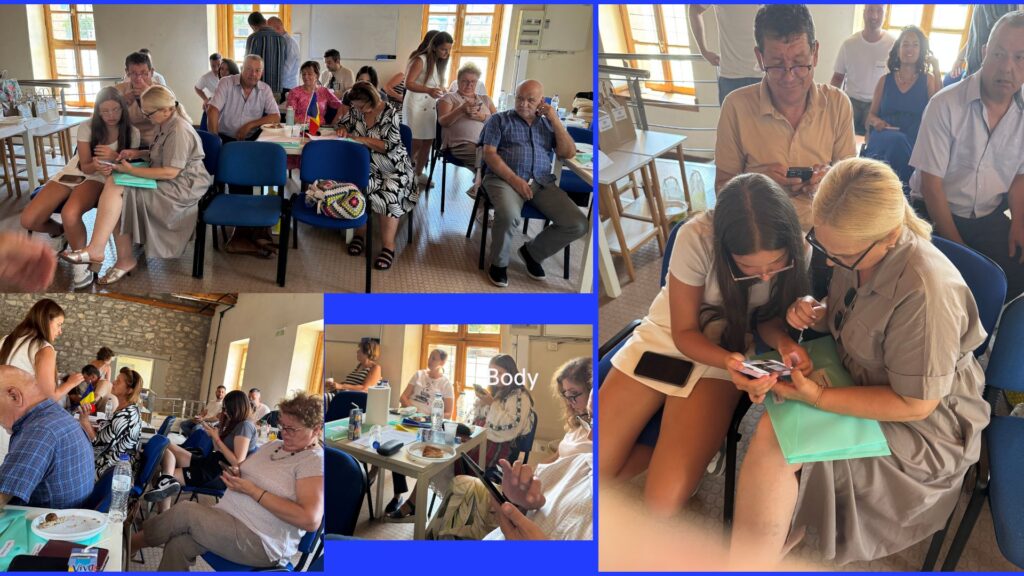
IMAGINI DIN TIMPUL EVENIMENTULUI:
CHESTIONAR DE SATISFACTIE-REZULTATE
INTERPRETAREA CHESTIONARULUI DE SATISFACTIE:
Desrierea platformei : https://seniorsgamificationtherapy.eurosyvec.eu/
*Testarea și validarea platformei SENIORS ZONE în mobilitatea Erasmus+ din Larisa (Grecia)
În perioada 23 – 27 iulie 2025, o delegație a Asociației Zona Integrare Europeană a participat la mobilitatea de formare pentru adulți organizată în Larisa, Grecia, în cadrul proiectului Erasmus+ KA121 – Educația Adulților, cu scopul de a testa și valida rezultatele digitale realizate în proiectul SENIORS ZONE – Gamification & Art-Therapy for Adults and Seniors.
Pe durata mobilității, participanții au lucrat aplicat la:
🔹 Testarea platformei e-learning: https://seniorsgamificationtherapy.eurosyvec.eu
🔹 Validarea jocurilor și atelierelor de pe platformă
🔹 Observarea utilizării în contexte reale (indoor & outdoor)
🔹 Interacțiune cu seniori din Grecia pentru feedback și schimb de bune practici
🔹 Colectarea de dovezi pentru raportul final: chestionare, fișe de observare, reflecții, fotografii, video
Activitățile au inclus:
- Ateliere interculturale și exerciții de comunicare
- Jocuri educative și terapeutice pentru dezvoltarea abilităților sociale și cognitive
- Testare practică în teren printr-un Treasure Hunt educațional la Meteora
- Ateliere digitale: aplicații pentru seniori, traduceri, orientare & comunicare online
- Digital Storytelling – crearea de povești Erasmus folosind Canva
- Activități ecologice și prototiparea unui mini-grădini terapeutice
Toate activitățile au fost realizate conform agendei oficiale a mobilității și au generat rezultate concrete, necesare pentru evaluarea produselor realizate în proiect. AGENDA_Activities_ENG_Larisa
Concluzii & Impact
✔️ Platforma și conținuturile sale sunt accesibile seniorilor și pot fi utilizate în sesiuni de formare.
✔️ Jocurile și atelierele testate au demonstrat impact pozitiv în interacțiune, relaxare, învățare și bună dispoziție.
✔️ Mobilitatea a contribuit la dezvoltarea de competențe digitale, sociale și interculturale pentru participanți.
Mulțumiri
Mulțumim organizației gazdă din Grecia pentru activități, disponibilitate și deschiderea spre colaborare pe termen lung, precum și tuturor participanților care au reprezentat cu profesionalism organizația noastră.
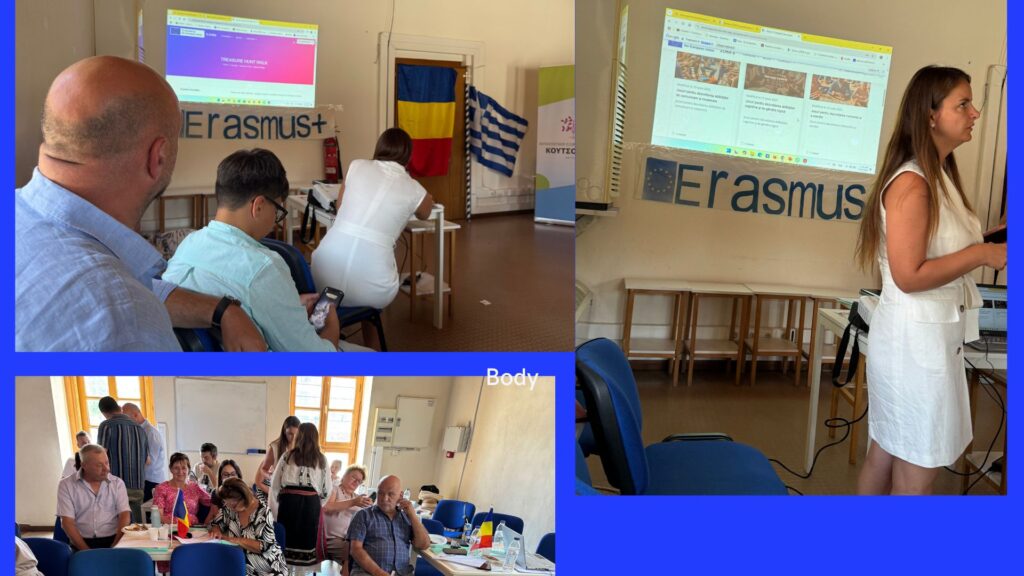
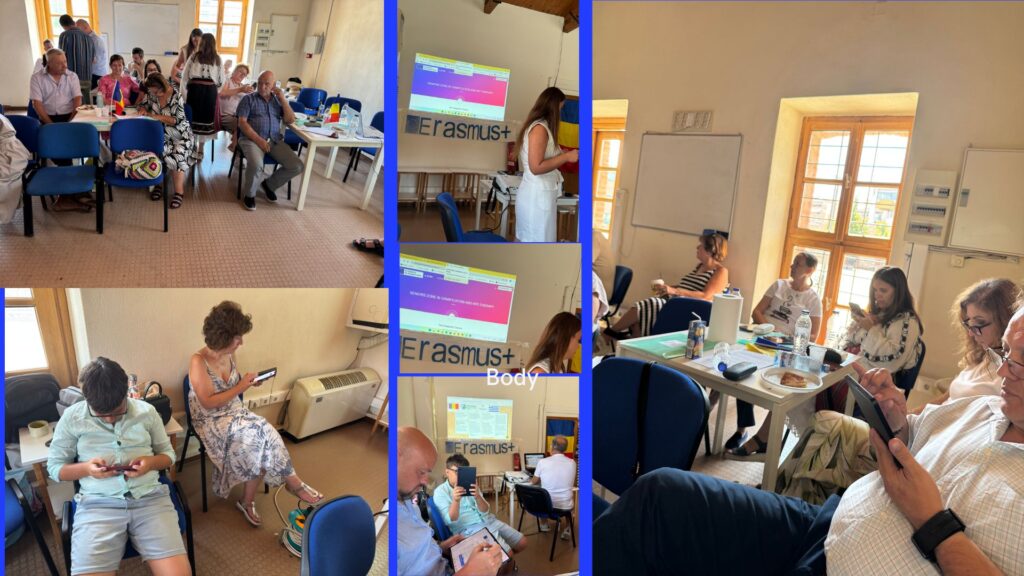
IMAGINI DIN TIMPUL ACTIVITATII DIN GRECIA
https://seniorsgamificationtherapy.eurosyvec.eu
Rezultate chestionarului conceput pentru a evalua obiceiurile digitale, preferințele și factorii motivaționali pentru integrarea gamificării în învățarea pe tot parcursul vieții pentru adulți și seniori.
Chestionar : SENIOR ZONE Link chestionar
Survey Interpretation – SENIOR ZONE Baseline Needs & Gamification Profile
Project: 2023-1-NL01-KA210-ADU-000157474 – Seniors ZONE
Source: Google Forms analytics (29 responses) –This report interprets the baseline questionnaire titled “SENIOR ZONE”, designed to assess digital habits, preferences, and motivational factors for integrating gamification into lifelong learning for adults and seniors.
1. Participant Profile
• 69% under 55; 13.8% between 55–65; 20.7% aged 66–75
➡️ Seniors (55+) represent 34.5% of respondents; a relevant baseline audience for project activities.
• Gender: 62.1% female; 37.9% male. fileciteturn30file0
2. Digital Usage Frequency
• 89.7% use digital devices daily; the rest weekly or occasionally.
➡️ High readiness for digital integration.
• 58.6% feel ‘very comfortable’ with technology; 37.9% comfortable. 0% discomfort.
➡️ Digital confidence level supports gamified e‑learning.
3. Gaming Habits
• Digital games: 17.2% daily; 51.7% weekly; 17.2% monthly; 13.8% never.
• Board games: 51.7% daily; 41.4% weekly. fileciteturn30file0
➡️ Strong interest in non‑digital play → entry pathway for gamification.
4. Preferred Game Types
• Word games: 48.3%
• Puzzle & strategy games: 24.1% each
• Educational games: 37.9%
➡️ Cognitive, linguistic and logic‑based mechanics are most appropriate for senior audiences.
5. Awareness of Gamification
• 20.7% fully familiar
• 51.7% have heard of it
• 27.6% not familiar.
➡️ Training must include introductory modules & scaffolding.
6. Expected Benefits of Gamification
• 55.2% believe it improves learning
• 34.5% believe it makes learning fun.
➡️ Project aligns with participants’ expectations.
7. Motivating Gamification Elements
• Competition: 51.7%
• Real‑world rewards: 41.4%
• Points & levels: 27.6%
• Certificates: 24.1% fileciteturn30file0
➡️ Key motivational drivers: recognition, tangible reward, peer interaction.
8. Suggested Activities for Seniors (Open Responses)
Suggestions include: word games, Sudoku, strategy/board games, VR simulations, cultural enrichment games, outdoor activities, health‑focused tasks, skill development (cooking, social media). fileciteturn30file0
➡️ Broad interest supports a multimodal gamified curriculum.
9. Key Insights & Implications
✔ Target group ready for digital adoption.
✔ Board game literacy → entry point for digital gamification.
✔ Motivation tied to recognition & emotional engagement.
✔ Gamification must be simple, meaningful, and socially connective.
✔ Consider hybrid models (offline → online transition).
10. Recommendations for Curriculum Design
• Start with narrative‑based word/puzzle mechanics.
• Integrate reward systems (badges, certificates, tangible rewards).
• Offer tech onboarding to reduce digital anxiety.
• Include community challenges for social reinforcement.
• Pilot VR only after digital confidence increases.
Licensed under Creative Commons Attribution 4.0 International (CC BY 4.0). Co-funded by the European Union.
Testare jocuri:
1.Games for developing cognitive and logical thinking skills . Digital Treasure Hunt. GooseChase app
Link game on platform: https://seniorsgamificationtherapy.eurosyvec.eu/course/view.php?id=43#section-4
Link chestionar: https://docs.google.com/forms/d/e/1FAIpQLSf5UyFnf5pC76TpP44PnnfUFtkXnYjEncMMmcApm9tkUMWj1g/viewform?usp=dialog
Rezultate:
Interpretare rezultate:
Survey Interpretation – Digital Treasure Hunt (GooseChase)
Project: 2023-1-NL01-KA210-ADU-000157474 – Seniors ZONE
This document presents the interpretation of the questionnaire results from the activity “Games for developing cognitive and logical thinking skills – Digital Treasure Hunt (GooseChase)”, based on 15 responses. The survey evaluates accessibility, usability, and learning impact for senior participants (aged 51+).
1. Participant Profile
• 66.7% of respondents are 51+, aligning with the project’s target group.
• The presence of younger respondents supports intergenerational learning.
• The age profile confirms the relevance of digital inclusion and step‑by‑step guidance.
2. Installation & Access to the App
• 73.3% installed the app independently, while 26.7% required assistance.
• This indicates that technical onboarding is manageable but initial support remains necessary for senior learners.
• Access via QR code (86.7%) was significantly more intuitive than manual code entry (13.3%). This validates the use of scannable tools in future sessions.
3. Navigation & Task Understanding
• 73.3% could choose a username without difficulty; 26.7% needed support.
• 86.7% found the mission list at the bottom of the screen, demonstrating good visual orientation.
• 93.3% successfully understood photo‑based tasks and used the ‘Take Photo’ function, confirming intuitive interaction.
4. Gamification Feedback
• 100% of respondents understood the scoring system and leaderboard.
• Leaderboards were perceived as motivating and easy to follow.
• The gamification system (points + missions + leaderboard) effectively supported engagement and competition in a positive learning context.
5. User Experience & Engagement
• Participants described the activities as captivating, enjoyable, accessible, and well‑structured.
• Words frequently used: ‘interesting’, ‘challenging’, ‘fun’, ‘rewarding’.
• A minority found the menu complex or required more time to adapt.
• Reported difficulties included: opening the game, navigation speed, and reading interface elements.
6. Cognitive and Emotional Impact
• Respondents reported learning new English vocabulary, problem‑solving, observational skills, and memory activation.
• The sense of accomplishment and playful learning increased motivation.
• Emotional feedback indicates reduced anxiety around digital tools when supported by collaborative play.
7. Willingness for Future Participation
• 86.7% answered ‘Yes, definitely’.
• 13.3% answered ‘Maybe’.
• 0% rejection rate indicates strong acceptance and positive perceived value.
• This confirms the viability of GooseChase as a long‑term tool for cognitive and digital training.
8. Conclusions & Recommendations
• GooseChase is highly suitable for cognitive and digital skill development in seniors.
• The interface is intuitive, but first‑time users benefit from guided onboarding.
• Gamification elements increased engagement, motivation, and confidence.
• Visual instructions, QR codes, and team‑based missions should be maintained.
• A future improvement is creating a simplified starter mission for acclimation.
Overall, the results validate the effectiveness of gamified learning for older adults and confirm the pedagogical direction of the Seniors ZONE project.
2.Games for developing cognitive and logical thinking skills . Memory games
Link game on platform: https://seniorsgamificationtherapy.eurosyvec.eu/course/view.php?id=67#section-4
Link survey: http://Games for developing cognitive and logical thinking skills . Memory games
Survey Interpretation – Memory Games Activity
Project: 2023-1-NL01-KA210-ADU-000157474 – Seniors ZONE
This document provides an interpretation of the results of the survey applied after the activity “Games for developing cognitive and logical thinking skills – Memory Games”. The survey collected 5 responses from participants aged 31–50, assessing the attractiveness, usability, difficulty, and perceived cognitive impact of the activity.
1. Participant Profile
All respondents (100%) are aged 31–50, representing active adults who are either trainers or learners familiar with digital applications. Although not fully within the 55+ senior target group, the data remains relevant for intergenerational learning and pilot testing.
2. Perceived Attractiveness & Motivation
100% of respondents rated the game as ‘Attractive’ or ‘Very attractive’. This demonstrates that the activity successfully generated interest and motivation, validating the pedagogical choice of memory games as a format that supports engagement and active participation.
3. Difficulty Level
80% of users preferred the ‘Medium’ difficulty level, while 20% selected ‘Low’. No respondents chose the ‘High’ difficulty level. This shows that the current configuration is well balanced: accessible for beginners and still stimulating for users with better cognitive skills.
4. Cognitive Impact
Responses indicate that 40% of participants believe the game helped ‘a lot’ in training memory and attention, while 60% reported a positive impact to ‘some extent’. No negative responses were recorded. This confirms that memory games contribute to strengthening cognitive processes in a non‑formal learning format.
5. Usability & Interface
60% rated the platform as ‘Very easy to use’ and 40% as ‘Easy to use’. No difficulties were reported. This highlights that the tool is accessible to users with medium digital competence and suitable for gradual integration into training programmes with senior participants.
6. Suggestions for Improvement
Participants suggested improving graphic elements and expanding the variety of visual pairs. Some participants stated the game is already appropriate as it is. This feedback indicates that minor visual enhancements could increase perceived quality without requiring major structural changes.
7. Conclusions & Recommendations
• The activity is attractive and effective for cognitive development.
• A medium difficulty level is optimal for most adult learners.
• The tool has proven intuitive and usable without requiring complex onboarding.
• Graphic updates and progressive levels may improve long‑term engagement.
Overall, the results confirm the value of memory games in supporting concentration, memory, and logical processing. The activity aligns with the project’s objectives and is suitable for future implementation with senior participants.
3. Art-terapie: Ateliere de colaj pentru dezvoltarea abilităților cognitive și a concentrării. Colaj de creație în grădină ZEN . ZEN Garden Crafting Collage
Link course on Moodle: https://seniorsgamificationtherapy.eurosyvec.eu/course/view.php?id=52#section-3
Link chestionar: https://docs.google.com/forms/d/e/1FAIpQLSdCdfDXynpfZXlolFG9SdvGuprZe1gy57-sL6HV6RnTYr908g/viewform?usp=dialog
Survey Interpretation – ZEN Garden Crafting Collage (Art-Therapy)
Project: 2023-1-NL01-KA210-ADU-000157474 – Seniors ZONE
This document presents the interpretation of the results collected from the activity “Art-therapy: ZEN Garden Crafting Collage”. The survey gathered 6 responses and evaluates emotional impact, accessibility, collaboration, sensory engagement, and overall satisfaction.
1. Participant Profile
• 66.7% of participants are aged 31–50 and 33.3% are 51+.
• Although not exclusively senior participants, the group represents a relevant demographic for piloting art-therapy interventions aimed at adults with diverse emotional and cognitive needs.
2. Emotional Response During the Activity
• 66.7% reported feeling ‘Very relaxed’ and 33.3% ‘Relaxed’.
• No neutral or negative emotional states were recorded.
• These responses support the conclusion that sensory-based collage activities are effective for emotional regulation and anxiety reduction.
3. Accessibility and Task Completion
• 50% completed the activity independently and 50% needed partial assistance.
• This indicates that the task difficulty was appropriate, while guidance remains important for less experienced or hesitant participants.
• The activity is accessible but benefits from facilitator scaffolding.
4. Sensory and Tactile Engagement
• 83.3% found tactile materials (sand, stones, figurines) highly enjoyable.
• 16.7% indicated difficulty or reduced interest.
• Sensory variety is therefore beneficial but should offer adaptation options for individuals with sensory sensitivity.
5. Collaboration and Social Interaction
• 83.3% interacted or collaborated with others during the workshop.
• Social engagement is a key outcome for inclusion-focused art-therapy, reinforcing peer support and emotional connection.
6. Overall Satisfaction
• 66.7% rated the experience 5/5, and 33.3% rated it 4/5.
• No negative or neutral responses were recorded.
• The activity demonstrates high motivational value, emotional benefit, and creative fulfillment.
7. Conclusions & Recommendations
• The activity successfully promotes relaxation, creativity, and emotional stabilization.
• Guidance should remain available throughout the activity to support hesitant users.
• Future sessions could include:
– Optional templates for learners needing structure.
– Freestyle extension tasks for advanced learners.
– Photographic reflection or sharing to consolidate group bonding.
Overall, the results validate the effectiveness of ZEN collage creation as an accessible art-therapy method for adult education and support the continuation and expansion of this approach within the Seniors ZONE project.
4. Jocuri pentru stimularea mișcării și a activității fizice . Dans așezat . Stated dance
Link workshop Moodle platform
Link survey: https://docs.google.com/forms/d/e/1FAIpQLSdwP762PG9QxRsDST2mw2B75kRkL1uUXPsilnp9zCLQ1_9x7w/viewform?usp=dialog
Survey Interpretation – Seated Dance Activity (Physical Stimulation)
Project: 2023-1-NL01-KA210-ADU-000157474 – Seniors ZONE
This interpretation summarises the responses from the activity “Games for physical movement stimulation – Seated Dance”. The survey collected 4 responses, evaluating accessibility, emotional impact, mobility stimulation, and participant satisfaction.
1. Participant Profile
• 100% of participants are aged 31–50.
• Participants fall within an active adult demographic, useful for pre‑testing before implementation with the target group 55+.
• The age profile confirms suitability for intergenerational formats and gradual adaptation for seniors.
2. Ability to Follow the Movements
• 75% followed most movements.
• 25% followed all movements without difficulty.
• No participants struggled or failed to complete the movements.
• This indicates the activity is **accessible and well‑paced**, appropriate for adults with varying coordination levels.
3. Enjoyment and Motivation
• 75% selected ‘I liked it very much’.
• 25% selected ‘I liked it’.
• No neutral or negative responses were recorded.
• The design of seated dance is confirmed as **highly motivating** and emotionally rewarding.
4. Emotional Impact and Well‑Being
• 100% felt ‘better and more relaxed’ after the session.
• No participant reported stress, tiredness, or no change.
• Emotional benefits confirm the value of combining gentle movement, rhythmic breathing, and positive atmosphere.
5. Elements Participants Appreciated Most
• 100% appreciated the cheerful atmosphere.
• 50% appreciated the music.
• 25% preferred gentle movements.
• 25% enjoyed social interaction.
• This highlights that emotional climate and music selection are key variables in participant engagement.
6. Preferences for Future Sessions
• 50% wish to try different songs.
• 50% want the activity to remain as it is.
• No request for difficulty increase or complex moves was indicated.
• Adaptability potential is high; playlists may be diversified to maintain motivation.
7. Conclusions & Recommendations
• The activity is validated as an effective tool for physical and emotional activation.
• Music and emotional climate are crucial motivational factors.
• The format supports accessibility for individuals with reduced mobility.
• Recommendations:
– Provide playlist options to enrich variety.
– Maintain low‑impact structure for seniors.
– Integrate optional standing elements for advanced learners.
Overall, results demonstrate that seated dance contributes to mood improvement, relaxation, light physical activation, and social connection. The activity aligns with the project’s objectives to stimulate physical engagement through gamified and creative methods.
Licensed under Creative Commons Attribution 4.0 International (CC BY 4.0).
Co-funded by the European Union.
5_Jocuri pentru stimularea mișcării și a activității fizice. Prinde și mișcă . Catch and Move
Link workshop Moodle: https://seniorsgamificationtherapy.eurosyvec.eu/course/view.php?id=47#section-2
Link survey: https://docs.google.com/forms/d/e/1FAIpQLSfJB5BDkK8wY1W21h4qa9gjRD-oUaGkfXk9G135-S9FTEoqgg/viewform?usp=dialog
Survey Interpretation – “Catch and Move” (Physical Stimulation Game)
Project: 2023-1-NL01-KA210-ADU-000157474 – Seniors ZONE
This document interprets the results of the survey applied after the activity “Catch and Move”, designed to stimulate movement, coordination, and collaboration. The survey gathered 4 responses and focused on accessibility, physical engagement, enjoyment, and learning impact.
1. Participant Profile
• 75% of respondents are adults aged 31–50, and 25% are 51+.
• While not exclusively seniors, the composition enables pilot testing before implementation with the core 55+ target group.
• Intergenerational participation reinforces the adaptability of the activity.
2. Instruction Follow‑Through
• 75% of participants reported it was “Easy” to follow instructions for special passes.
• 25% reported “Very easy”.
• No participant selected medium or difficult.
• This confirms the clarity and accessibility of movement instructions.
3. Preferred Movement Type
• 50% preferred the ‘Twist pass’ (dynamic rotational motion).
• 25% preferred the ‘One‑hand pass’.
• 25% preferred the ‘Forward circle pass’.
• Preferences indicate that variation and rhythm increase motivation.
4. Collaboration & Physical Engagement
• 50% reported strong improvement in collaboration and movement.
• 50% reported moderate improvement.
• The activity is therefore validated as supportive for social connection and mobility.
5. Enjoyment & Motivation
• 50% rated the activity with the maximum score (4/4).
• 50% rated it with a high score (3/4).
• 0% neutral or negative responses.
• Enjoyment is a strong predictor of adherence for future sessions.
6. Challenges Encountered
• 75% indicated “Some difficulties with movements”.
• 25% indicated the experience was clear and pleasant.
• No participants reported misunderstanding instructions.
• This highlights need for ongoing facilitator guidance, especially when scaling to seniors.
7. Conclusions & Recommendations
• The activity is accessible and motivating for adults, confirming potential transfer to senior learners.
• Guidance should be available for more complex movement patterns.
• Next steps:
– Introduce warm‑up and cool‑down routines.
– Allow participants to choose preferred rhythm/tempo.
– Adapt passes to seated or low‑impact formats for seniors.
Overall, “Catch and Move” is validated as an effective tool for stimulating physical activity, improving coordination, and supporting collaborative learning. Results align with the pedagogical and inclusion goals of the Seniors ZONE project.
Licensed under Creative Commons Attribution 4.0 International (CC BY 4.0).
Co-funded by the European Union.
6_Jocuri pentru dezvoltarea abilităților cognitive și de gândire logică „Vânătoare de comori” Meteora.
Link Moodle: https://seniorsgamificationtherapy.eurosyvec.eu/course/view.php?id=55#section-5
Link survey: https://docs.google.com/forms/d/e/1FAIpQLScmpHj0a0kszedpl_AOrto3N2XyW3vXd1KvzFYW9izBmmoIhQ/viewform?usp=dialog
Survey Interpretation – Digital Treasure Hunt “Meteora”
Project: 2023-1-NL01-KA210-ADU-000157474 – Seniors ZONE
This document presents the interpretation of the survey results from the activity “Digital Treasure Hunt – Meteora”, designed to stimulate logical thinking, problem-solving, orientation, collaboration, and digital skills. The survey collected 23 responses from participants aged 34 to 63.
1. Participant Profile
• The age range (34–63) demonstrates intergenerational participation, supporting both adults and near-senior learners.
• Several respondents are within the 55+ target group, validating the activity for senior inclusion.
• The mixed-age dynamic supports peer learning and technical support exchange.
2. General Perception of the Game Format
• 69.6% rated the format as ‘Interesting’ and 30.4% as ‘Very interesting’.
• 0% selected neutral or negative options.
• The results confirm high engagement and cognitive appeal of the activity structure.
3. Favourite Missions & Cognitive Engagement
Participants highlighted mission preferences for the following reasons:
• Orientation and spatial problem-solving (Mission 1, 3, 4)
• Symbol recognition and decoding tasks (religious symbols, cultural markers)
• Puzzle solving and digital problem-solving
• Emotional connection to location (Mission 5: peaceful landscape & reflection)
• Team-based decoding (Mission 6: building meaning from previous tasks)
This confirms that **narrative progression + cultural context + sensory immersion** increase motivation and cognitive performance.
4. Motivation to Continue
• 100% of respondents felt motivated to continue the game until the end.
• This indicates a strong intrinsic motivation and emotional investment in the learning process.
5. Collaboration & Social Interaction
• 87% rated collaboration as ‘Very good’ or ‘Good’.
• Peer support enabled successful task completion, especially during orientation or technological tasks.
• The activity strengthens teamwork, communication, and collective reasoning, aligned with adult learning principles.
6. Strengths Reported by Participants
Participants reported the following tasks as easiest:
• Taking photos / videos (visual documentation)
• Digital puzzles and multimedia tasks
• Group tasks requiring shared reflection
• Genially submissions and prompt-based content creation
This confirms high usability and intuitive navigation of the task structure.
7. Reported Challenges
Participants identified the following as most challenging:
• Orientation and spatial navigation (frequently mentioned)
• QR code reading and app installation
• Digital puzzle decoding for beginners
• Interpreting cultural symbols
This supports the need for **guided onboarding, map previews, and progressive difficulty scaffolding** for senior users.
8. Technology Use & Digital Readiness
• 52.2% used tablets and 43.5% mobile phones.
• 56.5% found the technology ‘Easy to use’ or ‘Partially difficult’.
• 39.1% reported full comfort; 8.7% required support.
• Camera usage confidence was high: 91.3% ‘Yes’, 8.7% ‘Partially’.
This indicates that **digital treasure hunts are feasible and scalable** for senior education when initial support is available.
9. Willingness to Participate Again
• 91.3% would ‘Definitely’ participate again.
• 8.7% responded ‘Maybe’.
• 0% refused or were uncertain.
This confirms **high sustainability and future participation potential** in digital educational games.
10. Conclusions & Recommendations
✔ The activity is cognitively stimulating, emotionally engaging, and culturally enriching.
✔ Collaboration and practical tasks help compensate for digital gaps.
✔ Progressive task difficulty and narrative-based missions support memory retention.
Recommendations:
• Add a warm‑up digital task before starting field missions.
• Provide mini‑tutorials (QR codes, camera, navigation).
• Offer hybrid formats: seated version for limited mobility participants.
• Apply optional difficulty paths for experienced users.
Overall, the activity demonstrates strong pedagogical value and aligns directly with the project’s objectives for developing cognitive skills, cultural awareness, and digital readiness among adult learners and seniors.
Licensed under Creative Commons Attribution 4.0 International (CC BY 4.0).
Co-funded by the European Union.
7.Art-terapie: Ateliere de colaj pentru dezvoltarea abilităților cognitive și a concentrării. Henri Matisse .
Link Moodle: https://seniorsgamificationtherapy.eurosyvec.eu/course/view.php?id=40#section-5
Link survey: https://docs.google.com/forms/d/e/1FAIpQLSf_9kbb5Yozw3uzPkZnpg5bq4NbrP3NfFHzMBjwNGKVx92zfw/viewform?usp=dialog
Survey Interpretation – Art-Therapy Collage Workshop (Henri Matisse)
Project: 2023-1-NL01-KA210-ADU-000157474 – Seniors ZONE
This document presents an analysis and interpretation of the survey results from the workshop “Art-therapy: Collage for developing cognitive skills and concentration – inspired by Henri Matisse”. The survey collected 3 responses and evaluates accessibility of the technique, emotional impact, self-awareness, creative satisfaction, and willingness to participate in future sessions.
1. Participant Profile
• 66.7% of respondents are aged 31–50 and 33.3% are 51+.
• This distribution confirms that the activity attracted adults with diverse learning needs, including individuals close to or within the target senior group.
• The presence of 51+ participants validates the art‑therapy approach for the target demographic.
2. Accessibility of the Collage Technique
• 66.7% reported the technique was “Very easy” to understand and apply.
• 33.3% selected “Easy”.
• 0% reported difficulty.
Interpretation: The introduction and facilitation were efficient, and the structure of the workshop ensured cognitive accessibility, even without previous art experience.
3. Personal Expression & Emotional Projection
• 66.7% indicated that their collage expressed important parts of their personal story.
• 33.3% reported partial emotional expression.
Interpretation: The workshop enabled autobiographical connection, personal reflection, and emotional validation, confirming the value of collage as a tool for identity-centered art-therapy.
4. Satisfaction With Results
• 33.3% felt “Very satisfied” with their collage.
• 66.7% felt “Satisfied, but unsure”.
Interpretation: The creative process was positively experienced, though some individuals require further confidence‑building. This suggests the need for positive reinforcement and reflective feedback frameworks.
5. Preferred Components of the Workshop
• 100% selected “Creating their personal collage” as the most appreciated part.
Narrative elements (Matisse story), demonstration, and group reflection facilitated skill acquisition, but creation remains the core motivational factor.
This supports a learner-centered and experiential approach.
6. Cognitive and Emotional Impact
• 33.3%: felt improved concentration.
• 66.7%: felt relaxed and detached from worries.
• 0% reported negative experiences.
Interpretation: The workshop successfully met dual therapeutic objectives: cognitive activation and emotional regulation.
7. Willingness to Continue
• 100% would “Definitely” participate in future workshops.
Interpretation: This indicates strong sustainability potential and learner retention.
8. Qualitative Feedback – Participant Voices
Participants provided the following comments:
• “Very interesting”
• “Thank you!”
• “Development of real life themes”
These comments reinforce the need for thematic diversity and real‑world relevance in future workshops.
9. Conclusions & Recommendations
• The workshop design is pedagogically and therapeutically sound.
• Participants benefit most from:
– guided demonstration → autonomous creation
– thematic storytelling → emotional resonance
– structured reflection → confidence development
• Recommendations:
– Expand autobiographical prompts for emotional depth.
– Offer optional templates for those needing structure.
– Integrate music or sensory materials to enhance immersion.
Overall, the survey confirms the workshop’s positive impact on cognitive stimulation, self-awareness, and emotional well‑being. It aligns with the project’s objectives to enhance inclusion, creativity, and therapeutic resilience for adult learners.
Licensed under Creative Commons Attribution 4.0 International (CC BY 4.0).
Co-funded by the European Union.
8.Art-terapie: Ateliere de modelare pentru dezvoltarea abilităților motorii și a creativității Sculptură în lut pentru mâini și suflet. Clay Sculpting for Hands and Heart
Link Moodle: https://seniorsgamificationtherapy.eurosyvec.eu/course/editsection.php?id=341&sr
Link survey: https://docs.google.com/forms/d/e/1FAIpQLSd2MOuSzw17NlskzKEN-h45dn8OYB0HhnsEcDun6szdi8pCoQ/viewform?usp=dialog
Survey Interpretation – Clay Sculpting for Hands and Heart (Art-Therapy)
Project: 2023-1-NL01-KA210-ADU-000157474 – Seniors ZONE
This document provides an interpretation of the survey results from the workshop “Clay Sculpting for Hands and Heart”, focused on developing fine motor skills, sensory awareness, creativity, and emotional regulation. The survey collected 4 responses from senior participants aged 55+, based on the analytics of the form.
1. Participant Profile
• 100% of participants are aged 55+.
• This confirms that the activity reached the project’s core target group.
• The workshop is therefore validated as relevant for senior mobility and therapeutic learning.
2. Emotional Response
• 75% felt relaxed and 25% felt joyful during the activity.
• 0% frustration or negative emotional indicators were recorded.
➡️ Interpretation: The sensory and tactile nature of clay work supports emotional relief, mindfulness, and grounding.
3. Motor Skill Accessibility
• 75% reported that sculpting was ‘A bit difficult, but manageable’.
• 25% reported it was ‘Easy’.
➡️ Interpretation: The activity is moderately challenging, which is beneficial for neuro-motor stimulation.
Guidance and adaptive tools may be needed for those with arthritis or low dexterity.
4. Fine Motor Skills and Mobility
• 75% felt improved movement in fingers and hands to some extent.
• 25% felt definite improvement.
➡️ This supports the workshop’s effectiveness in stimulating joint mobility, hand strength, and motor memory.
5. Activity Elements Participants Liked Most
• 75%: The freedom to create something personal.
• 25%: Sensory contact with the clay.
• Collaborative interaction was valued, though not universally.
➡️ Personal expression and tactile feedback are central motivational components.
6. Relaxation and Emotional Well‑Being
• 100% reported feeling calmer and more relaxed after the workshop.
➡️ Confirms emotional regulation and stress reduction impact.
7. Conclusions & Recommendations
✔ Clay sculpting is effective for fine motor stimulation, sensory grounding, and emotional well‑being.
✔ The task difficulty is appropriate, encouraging growth without creating frustration.
Recommendations:
• Offer ergonomic tools or adaptive handles for participants with mobility limitations.
• Begin with warm‑up exercises for hands (finger articulation, wrist rotation).
• Give optional templates for insecure learners; creative freedom for confident participants.
• Integrate reflective sharing at the end to reinforce confidence and identity expression.
Overall, the activity strongly aligns with the project’s objectives and demonstrates high value for senior inclusion, therapeutic development, and motor‑cognitive reinforcement.
Licensed under Creative Commons Attribution 4.0 International (CC BY 4.0).
Co-funded by the European Union.
9. Art-therapy: Literary creation workshops for developing communication and expression skills. Storybook with AI
Link Moodle: https://docs.google.com/forms/d/e/1FAIpQLScLX1gqKToJMUR7z6jNdYofKujFAqqiIkEwIOOypOrbS7v-cg/viewform?usp=dialog
Link survey: https://docs.google.com/forms/d/e/1FAIpQLScLX1gqKToJMUR7z6jNdYofKujFAqqiIkEwIOOypOrbS7v-cg/viewform?usp=dialog
Survey Interpretation – Art‑Therapy Workshop: Storybook with AI (Gemini)
Project: 2023-1-NL01-KA210-ADU-000157474 – Seniors ZONE
Source: Google Forms survey results (5 respondents) fileciteturn14file0
This document presents the interpretation of the survey applied after the workshop “Art‑therapy: Literary creation for developing communication and expression skills – Storybook with AI (Gemini)”. The activity explored the use of AI for creative writing, memory activation, emotional expression, and artistic autonomy.
1. Participant Profile
• 100% of respondents are aged 31–50. fileciteturn14file0
• Although not yet fully senior participants, the group represents an essential testing audience for refining materials, workflow instructions, and scaffolding before introducing the activity to the 55+ target group.
• The age distribution confirms relevance for intergenerational art‑therapy with digital tools.
2. Perceived Attractiveness of the Activity
• 60% rated the activity as ‘Very interesting’; 40% as ‘Interesting’. fileciteturn14file0
• No neutral or negative responses.
Interpretation: AI‑assisted storybook creation is perceived as motivational and emotionally engaging.
3. Ease of Using Gemini for Story Creation
• 60% found the tool ‘Very easy’ to use; 40% ‘Easy’. 0% reported difficulty. fileciteturn14file0
Interpretation: Gemini is accessible for first‑time users and can support initial AI literacy without creating frustration.
The interface is suitable for guided use with adults and seniors if onboarding is structured.
4. Preferred Workshop Components
• 40% enjoyed listening to AI‑generated stories.
• 40% preferred visualising AI‑generated images.
• 20% valued sharing stories with others. fileciteturn14file0
Interpretation: The narrative + visual + social triad is an effective engagement model.
Emotional stimulation increases when creation is combined with group reflection.
5. Creativity & Personal Expression
• 80% felt the activity supported creative and autobiographical expression ‘A lot’ and 20% ‘Very much’. fileciteturn14file0
• 0% indicated ‘Little’ or ‘Not at all’.
Interpretation: AI support does not eliminate authorship; rather, it scaffolds it.
Participants perceive AI as a co‑creator, not a replacement.
6. Suggestions for Improvement
• 60% requested more illustrative images.
• 20% requested more time for stories.
• 20% requested audio reading options. fileciteturn14file0
Recommendations:
– Extend session length (60’ → 90’).
– Add a ‘visualisation stage’ for image refinement.
– Include AI voice narration for emotional immersion.
7. Conclusions & Recommendations
✔ The workshop successfully stimulated emotional expression, memory activation, and narrative thinking.
✔ AI tools supported creativity without inhibiting ownership.
✔ Accessibility level is appropriate for scaling to seniors under guided facilitation.
Pedagogical recommendations:
• Provide structured prompt templates for insecure writers.
• Allow freestyle writing for confident participants.
• Combine AI‑generated illustrations with collage to strengthen sensory input.
• Offer printed mini‑storybook output at the end for self‑esteem reinforcement.
Overall, the results demonstrate that AI‑assisted storybook creation is an efficient and emotionally safe approach for improving communication skills, boosting self‑expression, and reinforcing narrative confidence in adult education.
Licensed under Creative Commons Attribution 4.0 International (CC BY 4.0).
Co‑funded by the European Union.
10.Art-therapy: Modeling workshops for developing motor skills and creativity . Atelier de modelare pentru seniori. Modeling Workshop for Seniors
Link Moodle: https://seniorsgamificationtherapy.eurosyvec.eu/course/view.php?id=41#section-0
Link survey: https://docs.google.com/forms/d/e/1FAIpQLSeoc3cXNiAwGW83FSx6BX_Hwl_xsD02ecK6D6js43IpY1ofgw/viewform?usp=dialog
Survey Interpretation – Modeling Workshop for Seniors (Art‑Therapy)
Project: 2023-1-NL01-KA210-ADU-000157474 – Seniors ZONE
Source: Google Forms analytics (13 responses) fileciteturn15file0
This document interprets the results of the activity “Modeling Workshop for Seniors”, focused on developing fine motor skills, hand mobility, creativity, attention, and emotional regulation. The activity targeted participants aged 31–50 and 55+, confirming the suitability of the workshop for adult and senior learners.
1. Participant Profile
• 46.2% are aged 31–50 and 53.8% are 55+. fileciteturn15file0
• The inclusion of the 55+ demographic confirms alignment with the project’s target group.
• Intergenerational participation supports collaborative learning and peer support.
2. Overall Experience
• 84.6% selected ‘Very pleasant’ and 15.4% ‘Pleasant’. fileciteturn15file0
Interpretation: The workshop generated a strong positive emotional response and high participant satisfaction.
3. Emotional and Sensory Experience
• Participants reported feeling: relaxed (46.2%), curious to try new things, focused, joyful, or enthusiastic (38.5%). Only 15.4% experienced minor limitations. fileciteturn15file0
Interpretation: The tactile qualities of clay help with emotional grounding and attentional focus.
4. Creativity and Personal Expression
• 23.1% felt heavily supported in expressing their creativity, while 76.9% reported moderate support. 0% reported low or no expressive benefit. fileciteturn15file0
Interpretation: The activity successfully fosters identity expression and self‑confidence.
5. Technical Accessibility
• 84.6% found modeling techniques easy to follow; 15.4% found some steps more complex. 0% reported global difficulty. fileciteturn15file0
Interpretation: The activity is accessible and appropriate for seniors when guided.
6. Elements Participants Appreciated Most
• Group atmosphere and discussions (38.5%)
• Artistic freedom (38.5%)
• Practical modeling process (23.1%)
• Presentation and sharing of works → emotional validation
• Virtual exhibition → sense of community and accomplishment fileciteturn15file0
These preferences validate the workshop’s balance between technique, expression, and social connection.
7. Final Presentation & Confidence
• 61.5% felt emotional but considered it a good experience; 23.1% enjoyed listening to others; 15.4% felt proud of their results. fileciteturn15file0
Interpretation: Sharing creative outcomes supports confidence, belonging, and resilience.
8. Conclusions
✔ The workshop has demonstrated benefits for motor skills, emotional stability, and creativity.
✔ Levels of difficulty and sensory stimulation are appropriate for senior education.
✔ The experience promotes community‑building and inclusion.
9. Recommendations
• Provide alternative modeling tools for participants with arthritis.
• Integrate warm‑up exercises for hand mobility.
• Introduce optional guided templates for hesitant learners.
• Continue developing virtual/physical exhibitions to reinforce motivation.
Overall, the activity shows strong alignment with the project’s objectives and demonstrates impact on motor, cognitive, and emotional development in adult and senior learners.
11.Art-therapy: Painting and drawing workshops for the development of emotional creativity and expression .Atelier de pictură și desen pentru dezvoltarea creativitatii si expresiei emotionale la seniori.
Link Moodle: https://seniorsgamificationtherapy.eurosyvec.eu/course/view.php?id=42#section-4
Link survey: https://docs.google.com/forms/d/e/1FAIpQLSdK8s8GJiyPveu5p-gNgxgGiz6CEVlpFTxYz0E_ovESpbb1bg/viewform?usp=dialog
Survey Interpretation – Art‑Therapy Workshop: Painting & Drawing
Project: 2023-1-NL01-KA210-ADU-000157474 – Seniors ZONE
Source: Google Forms analytics (11 responses)
This document presents the interpretation of the results from the workshop “Painting and Drawing for the Development of Emotional Creativity and Expression”, based on the survey data provided by participants.
1. Participant Profile
• 54.5% of respondents are aged 31–50 and 45.5% are 55+, confirming that the workshop successfully engaged both adults and seniors.
fileciteturn16file0
• The inclusion of 55+ participants validates the activity for the project’s core target group.
2. Emotional Expression & Creativity
• 63.6% reported that the activity helped them express emotions ‘very much’, and 36.4% ‘to some extent’.
fileciteturn16file0
➡️ Interpretation: Painting and drawing serve as an effective channel for emotional projection and reflective self-expression.
3. Stress Relief & Emotional Regulation
• 72.7% stated the activity helped reduce stress, and 27.3% partially. 0% negative responses.
fileciteturn16file0
➡️ The workshop supports emotional well-being and therapeutic relaxation.
4. Learning Outcomes
• 100% of participants confirmed they learned something new (techniques, approaches, materials).
fileciteturn16file0
➡️ The activity demonstrates educational value, skill development, and cognitive stimulation.
5. Social Interaction & Group Dynamics
• 90.9% reported creating new friendships or pleasant discussions during the workshop.
fileciteturn16file0
➡️ Social connection reinforces inclusion, integration, and emotional safety.
6. Well‑Being & Impact on Mood
• 72.7% reported a ‘very positive’ impact on well‑being; 27.3% ‘slightly positive’. 0% neutral or negative.
fileciteturn16file0
➡️ Emotional response confirms therapeutic value and motivational continuity.
7. Recommendation & Public Interest
• 90.9% would recommend the activity to others; only 9.1% uncertain. None responded ‘No’.
fileciteturn16file0
➡️ High replicability potential and sustainability within the project.
8. Conclusions
✔ The workshop is emotionally, socially, and educationally effective.
✔ Supports cognitive development (creativity, attention, expressive communication).
✔ Reinforces community connection for seniors through shared participation.
✔ Suitable for continuation, scaling, and integration into regular program activities.
9. Recommendations
• Provide optional guided templates for insecure participants.
• Introduce themed sessions (seasons, memories, emotions, music + color).
• Combine painting with short reflective sharing circles.
• Offer adaptive materials (thicker brushes, ergonomic handles) for seniors with mobility challenges.
12_Jocuri pentru stimularea mișcării și a activității fizice . Bingo . Movement Bingo!
Moodle: https://seniorsgamificationtherapy.eurosyvec.eu/course/view.php?id=45#section-2
Link survey: https://docs.google.com/forms/d/e/1FAIpQLSe7OUv7VJTWv6p7SQ63S1BVSXMKHDrC4m5wjMbsd35cNHyKgg/viewform?usp=dialog
12_Survey Interpretation – Movement Bingo (Physical Stimulation Game)
Project: 2023-1-NL01-KA210-ADU-000157474 – Seniors ZONE
Source: Google Forms analytics (4 responses) fileciteturn17file0
This document interprets the results of the activity “Movement Bingo”, designed to stimulate physical movement, coordination, motivation and social interaction among adult and senior participants.
1. Participant Profile
• 75% of participants are aged 31–50 and 25% are 55+. fileciteturn17file0
• Although not exclusively seniors, the presence of 55+ participants confirms partial alignment with the target group.
• The activity demonstrates intergenerational applicability.
2. Difficulty Level of Movements
• 50% found the activity ‘Very easy’ and 25% ‘Easy’; 25% ‘Moderate’. 0% difficult. fileciteturn17file0
➡️ Interpretation: The game is accessible and suitable for beginners and seniors.
➡️ Movements are low‑impact and friendly for reduced mobility.
3. Motivation & Engagement
• 75% reported being “Active the whole time”, 25% “Partially motivated”. fileciteturn17file0
➡️ Motivation levels are high, suggesting that the bingo format encourages continuous participation.
4. Degree of Enjoyment
• 50% selected ‘4 – Very much’, 50% ‘3 – Much’. fileciteturn17file0
➡️ Enjoyment is a predictor for long‑term adherence to physical activities.
5. Interaction & Social Experience
• 50% perceived interaction as ‘Pleasant’, 25% ‘Very pleasant’, 25% neutral. fileciteturn17file0
➡️ The activity encourages social contact, but some participants may need support to connect.
➡️ Recommendation: assign pairs or mini‑teams.
6. Effect on Mood & Energy
• 75% reported feeling “Better and more energized”, 25% “Slightly better”. 0% neutral or tired. fileciteturn17file0
➡️ This confirms the activity’s positive impact on well‑being and emotional regulation.
7. Conclusions
✔ Movement Bingo is accessible, motivating and socially engaging.
✔ The activity supports motor activation, mood improvement and inclusion.
✔ Suitable for continued use in senior programs with light adaptation.
8. Recommendations
• Add variations of difficulty (seated / standing / balance tasks).
• Integrate music to increase rhythm & motivation.
• Use thematic bingo boards (seasons, emotions, holiday edition).
• Provide warm‑up and cool‑down guidance to ensure safety.
13.Jocuri pentru dezvoltarea abilităților cognitive și de gândire logică . Călătoria celor 7 coline
Link Moodle: https://seniorsgamificationtherapy.eurosyvec.eu/course/view.php?id=56#section-15
Link survey: https://docs.google.com/forms/d/e/1FAIpQLSfQyGah54Dukzttn9dARA1w0NaLfF_dthU0Zh1naOF_h8-Xrg/viewform?usp=dialog
13_Survey Interpretation – ‘The Journey of the 7 Hills’ (Cognitive Games)
Project: 2023-1-NL01-KA210-ADU-000157474 – Seniors ZONE
Source: Google Forms analytics (12 responses) – fileciteturn18file0
This document interprets the survey results from the activity “The Journey of the 7 Hills”, a digital puzzle-based cognitive game designed to improve logical thinking, visual memory, attention, cultural knowledge, and digital skills among adult and senior learners.
1. Participant Profile
• 25% aged 12–30, 41.7% aged 31–50, and 33.3% aged 51+. fileciteturn18file0
• The presence of the 51+ demographic confirms successful outreach to the target group.
• Intergenerational participation reinforces peer learning and confidence building.
2. Engagement & User Experience
• 83.3% rated the activity as ‘Interesting and captivating’. fileciteturn18file0
• Participants enjoyed: digital puzzles, visual discovery of cities, concentration challenges, and virtual travel components.
➡️ The immersive virtual journey increased cognitive engagement and personal motivation.
3. Cognitive Skills Developed
• Key abilities strengthened according to participants: attention, concentration, logical thinking, visual memory, cultural knowledge, patience and perseverance. fileciteturn18file0
➡️ Confirmed impact on core cognitive skills essential for senior learning.
4. Strategies Used to Solve Puzzles
• Most applied logical methods: edge pieces first, sorting by colour, familiar landmarks, city name letters, and visual anchors. fileciteturn18file0
➡️ Demonstrates active problem‑solving and autonomy.
5. Difficulty Level
• 58.3% Easy, 41.7% Suitable/Moderate. 0% Difficult. fileciteturn18file0
➡️ The game’s difficulty level is appropriate and accessible for the target group.
6. Motivation & Emotional Impact
• 100% motivated to finish the game, mainly due to curiosity, cultural discovery, and progressive challenge. fileciteturn18file0
• Users reported enjoyment, confidence boost, and cultural satisfaction.
➡️ High motivational value supports long‑term engagement.
7. Learning Outcomes Reported
• Participants learned new European cities, cultural facts, tablet/phone use, online game navigation, and self‑management skills (focus, patience). fileciteturn18file0
➡️ Validates educational impact in line with project objectives.
8. Suggestions for Improvement
• Requests included: higher difficulty progression, clearer images, more puzzle shape variation, and extended time for completion. fileciteturn18file0
➡️ These insights can guide UX refinement and scaffolding for seniors.
9. Conclusions
✔ The activity supports logical thinking, memory, concentration, cultural learning, and digital literacy.
✔ Emotional feedback confirms motivation and enjoyment.
✔ Suitable for seniors with light facilitation; scalable for independent use.
✔ Strongly aligned with the project’s inclusion, cognitive development, and digital skills goals.
10. Recommendations
• Add optional levels: beginner / intermediate / advanced.
• Provide warm‑up tutorials for navigation.
• Integrate hints or guided help for seniors with lower digital skills.
• Include reflective questions or cultural micro‑lessons after each city.
14. Art-terapie: Ateliere de modelare pentru dezvoltarea abilităților motorii și a creativității. Colaj creativ și mozaic. Creative Collage & Mosaic
Moodle:https://seniorsgamificationtherapy.eurosyvec.eu/course/view.php?id=66#
Survey Interpretation – Creative Collage & Mosaic (Art‑Therapy)
Project: 2023-1-NL01-KA210-ADU-000157474 – Seniors ZONE
Source: Google Forms analytics (15 responses) – fileciteturn19file0
This document interprets the results of the workshop “Creative Collage & Mosaic”, designed to stimulate fine motor skills, sensory awareness, emotional expression, creativity and social inclusion in adult and senior learners.
1. Participant Profile
• 53.3% of participants are aged 55+; 46.7% are 31–50. fileciteturn19file0
• The group composition confirms strong alignment with the project’s target demographic.
• The activity successfully reached senior learners while maintaining intergenerational participation.
2. Emotional Experience During the Activity
• 93.3% felt relaxed; remaining participants reported positive emotional states. fileciteturn19file0
➡️ Interpretation: The tactile and visual nature of collage supports emotional regulation and grounding.
3. Material Accessibility & Ease of Use
• 80% reported it was “Very easy” to work with materials; 20% “Mostly easy”. 0% difficulty. fileciteturn19file0
➡️ Materials and instructions are appropriate for senior-friendly art‑therapy.
4. Emotional Expression & Memory Activation
• 73.3% reported the activity helped express emotions/memories; 26.7% partially. fileciteturn19file0
➡️ The activity supports autobiographical reflection and narrative identity.
5. Preferred Components of the Workshop
• Most appreciated elements:
– 53.3%: Creative construction of the collage
– 26.7%: Discussions during the workshop
– 20%: Choosing materials and themes
➡️ The creation phase is the core motivational driver, supported by social interaction. fileciteturn19file0
6. Social Interaction & Group Work
• 86.7% enjoyed interacting with others; 13.3% preferred independent work. fileciteturn19file0
➡️ Indicates that the workshop fosters belonging while respecting autonomy.
7. Willingness to Participate Again
• 93.3% would “Definitely” participate again; 6.7% “Maybe”. 0% negative. fileciteturn19file0
➡️ Confirms sustainability and motivation for continued participation.
8. Conclusions
✔ The workshop is emotionally accessible, socially engaging, and cognitively stimulating.
✔ Strengthens fine motor skills, narrative expression, and emotional well‑being.
✔ Fully aligned with the project’s objectives for inclusion, participation and emotional resilience.
9. Recommendations
• Provide optional visual templates for insecure learners.
• Combine collage with short reflection circles for emotional integration.
• Offer adaptive scissors/glue tools for arthritis or mobility limitations.
• Expand sensory palette (textures, natural materials) to deepen engagement.
15. Art-terapie: Ateliere de colaj pentru dezvoltarea abilităților cognitive și a concentrării. Colaj de autoportete. Self-Portrait Collage
Moodle: https://seniorsgamificationtherapy.eurosyvec.eu/course/view.php?id=53
Survey Interpretation – Self‑Portrait Collage (Art‑Therapy)
Project: 2023-1-NL01-KA210-ADU-000157474 – Seniors ZONE
Source: Google Forms analytics (4 responses) – fileciteturn20file0
This document presents the interpretation of the survey results from the workshop “Self‑Portrait Collage”, aimed at developing autobiographical expression, self‑reflection, fine motor skills, and emotional awareness in adult and senior learners.
1. Participant Profile
• 75% of participants are aged 31–50 and 25% are 51+. fileciteturn20file0
➡️ The presence of 51+ participants confirms partial alignment with the project’s target group.
➡️ The activity is accessible and engaging for adults transitioning into senior education.
2. Ease of Autobiographical Expression
• 75% found it ‘Easy’ to express themselves; 25% ‘Very easy’. 0% reported difficulty. fileciteturn20file0
➡️ Interpretation: The collage medium is an effective tool for identity exploration and communication.
3. Personal Insight & Self‑Discovery
• 75% stated they ‘Definitely’ learned something about themselves during the workshop; 25% answered ‘Maybe’. fileciteturn20file0
➡️ Autobiographical reflection was stimulated successfully.
4. Materials Used & Sensory Approach
• 50% used magazine cutouts; 25% hand‑drawn elements; 25% markers/pencils. fileciteturn20file0
➡️ The workshop promotes mixed‑media sensory engagement and creative autonomy.
5. Energy Level & Task Appropriateness
• 100% rated the activity as ‘Relaxing and interesting’. 0% felt discomfort or mismatch. fileciteturn20file0
➡️ Confirms emotional safety and accessibility of task design for therapeutic use.
6. Preferred Improvements for Future Workshops
• 75% requested more time for personal reflection.
• 25% preferred more visual examples. fileciteturn20file0
➡️ Recommendations: extend duration to 75–90 minutes; provide structured inspiration boards.
7. Conclusions
✔ The activity is educationally and therapeutically valuable.
✔ Promotes self‑knowledge, emotional regulation, and creative identity.
✔ Senior accessibility confirmed; suitable for scaling within the project.
✔ Fully aligned with the objectives of inclusion and adult education.
8. Recommendations
• Provide reflection prompts (life stages, memories, values, aspirations).
• Offer optional templates and mood boards.
• Integrate sharing circles for confidence building.
• Consider thematic versions (e.g., ‘Self‑Portrait through Nature’, ‘Timeline of Me’).
16. Art-terapie: Ateliere de colaj pentru dezvoltarea abilităților cognitive și a concentrării. Colaj de viata. “Stories in Images: Collage and Memory”
Moodle:https://seniorsgamificationtherapy.eurosyvec.eu/course/view.php?id=51
Survey Interpretation – Stories in Images: Collage & Memory
Project: 2023-1-NL01-KA210-ADU-000157474 – Seniors ZONE
Source: Google Forms analytics (5 responses) – fileciteturn21file0
This document interprets the results of the workshop “Stories in Images: Collage & Memory”, an art‑therapy activity focused on autobiographical reflection, memory activation, emotional expression, and narrative communication through collage.
1. Participant Profile
• 80% participants aged 31–50, 20% aged 51+. fileciteturn21file0
➡️ Partial alignment with the 55+ target group; activity remains relevant for adult learners transitioning toward senior education.
2. Ease of Selecting Autobiographical Images
• 60% reported it was ‘Easy’, 40% ‘Very easy’. 0% difficulty. fileciteturn21file0
➡️ Interpretation: Visual autobiographical prompts are accessible and intuitive for participants.
3. Emotional Response During the Activity
• 60% felt happy/relaxed; 40% nostalgic/emotional. 0% confusion or discomfort. fileciteturn21file0
➡️ Confirms that memory recollection can generate emotional depth while remaining safe and manageable.
4. Willingness to Share Personal Stories
• 40% ‘Yes, with pleasure’; 40% ‘Yes, but with emotions’; 20% preferred privacy. fileciteturn21file0
➡️ Indicates varying comfort levels; sharing spaces should be optional and supported.
5. Preferred Components of the Workshop
• 40% browsing magazines and choosing images
• 40% storytelling moments
• 20% cutting/arranging materials
➡️ Highlights the emotional value of selection and narrative phases. fileciteturn21file0
6. Learning Outcomes & Participant Reflections
Reported takeaways included:
• Understanding that meaningful memories can be unexpected
• Emotional catharsis and nostalgic reflection
• Ability to express emotions visually
➡️ Confirms cognitive and emotional development aligned with adult education objectives. fileciteturn21file0
7. Conclusions
✔ The workshop successfully stimulates memory recall, autobiographical reflection, and emotional expression.
✔ Activity design is accessible and appropriate for adult and senior learners.
✔ Results support the educational and therapeutic relevance of collage‑based storytelling in KA210‑ADU.
8. Recommendations
• Expand time for narrative sharing and emotional integration.
• Provide optional prompts: themes (childhood, journeys, home, resilience).
• Offer privacy‑respecting alternatives (silent reflection, journaling, closed collage).
• Incorporate guided breathing before memory work for emotional safety.
17. Art-therapy: Literary creation workshops for developing communication and expression skills. Collaborative Storytelling & Social Writing .
Moodle: https://seniorsgamificationtherapy.eurosyvec.eu/course/view.php?id=64
Survey Interpretation – Collaborative Storytelling & Social Writing
Project: 2023-1-NL01-KA210-ADU-000157474 – Seniors ZONE
Source: Google Forms analytics (5 responses) – fileciteturn22file0
This report presents the interpretation of the results from the workshop “Collaborative Storytelling & Social Writing”, an art‑therapy and communication‑based activity designed to support expression, communication skills, emotional connection and social inclusion among adult and senior learners.
1. Participant Profile
• 80% aged 31–50 and 20% aged 51+. fileciteturn22file0
➡️ Partial alignment with the target group (55+); participants represent a transition group toward senior education.
2. Emotional Climate During the Workshop
• 60% felt “very good – listened to and involved”.
• 40% felt “good – enjoyed contributing”. fileciteturn22file0
➡️ Indicates emotional safety and positive group interaction.
3. Experience During the Writing Task
• 80%: “pleasant and interesting”
• 20%: “emotional and sincere”
➡️ The letter‑writing component enabled emotional connection and empathy.
4. Ease of Expression
• 20%: “very easy, ideas came immediately”
• 80%: “easy, with short thinking time” fileciteturn22file0
➡️ The activity demonstrated accessibility for participants with diverse communication needs.
5. Impact on Social Connection
• 20%: felt “very connected” afterwards
• 80%: felt “slightly more connected” fileciteturn22file0
➡️ The collaborative narrative increased social cohesion and peer interaction.
6. Participant Feedback Highlights
Examples of participant reflections:
• “Working in a group”, “Interrelation”, “Freedom to talk”,
• “We talked about books and films”,
• “It was a pleasant experience”
➡️ These demonstrate cultural anchoring and identity‑based interaction. fileciteturn22file0
7. Pedagogical Outcomes
🧠 Cognitive & communication benefits:
• idea sequencing, vocabulary activation, emotional literacy
• self‑expression, active listening, turn‑taking
💙 Emotional development:
• empathy, vulnerability, reflective thinking
🌍 Social inclusion:
• belonging, trust, understanding diversity
8. Conclusions
✔ The activity is accessible and emotionally safe.
✔ Supports communication skills and emotional learning.
✔ Demonstrates relevance for expansion to senior target groups.
✔ Fully aligned with KA210‑ADU goals: inclusion, participation, community‑building.
9. Recommendations
• Extend session time to 75–90 minutes.
• Provide sentence starters and vocabulary banks.
• Create optional reflection segments for emotional integration.
• Prepare senior‑friendly materials (larger fonts, slower pacing).
18.Jocuri pentru dezvoltarea memoriei și a atenției. Puzzle Parade
Moodle:https://seniorsgamificationtherapy.eurosyvec.eu/course/view.php?id=60#panel-0
Survey Interpretation – Puzzle Parade (Memory & Attention Games)
Project: 2023-1-NL01-KA210-ADU-000157474 – Seniors ZONE
Source: Google Forms analytics (6 responses) – fileciteturn23file0
This document interprets the responses to the activity “Puzzle Parade”, which included word search, crosswords, Sudoku, visual riddles and logic games. The activity aimed to stimulate memory, concentration, logical thinking and social collaboration in adult and senior learners.
1. Participant Profile
• 83.3% aged 31–50 and 16.7% aged 55+. fileciteturn23file0
➡️ The activity partially reached the senior group and confirms suitability for future 55+ implementation.
2. Difficulty of Understanding Game Rules
• Results are evenly distributed: 33.3% ‘Very easy’, 33.3% ‘Easy’, 33.3% ‘A bit difficult’. 0% reported high difficulty. fileciteturn23file0
➡️ Interpretation: Rules are accessible, with minor challenges indicating the need for step‑by‑step examples for beginners.
3. Preferred Puzzle Types
• 50%: Visual riddles (images)
• 33.3%: Word search
• 16.7%: Sudoku
➡️ Visual and associative tasks generate the strongest engagement. fileciteturn23file0
4. Cognitive Impact
• 33.3% felt the activity helped “very much” with memory/logic
• 66.7% “to some extent”
• 0% negative responses
➡️ The workshop supports cognitive stimulation, especially concentration, pattern recognition and short‑term memory. fileciteturn23file0
5. Collaboration & Social Interaction
• 66.7%: “Very pleasant – felt connected to others”
• 33.3%: “Pleasant – collaborated well”
➡️ The activity successfully promotes communication, support and peer teamwork. fileciteturn23file0
6. Willingness to Participate Again
• 100%: ‘Yes, definitely / probably’
➡️ Indicates sustainability and motivation for future sessions. fileciteturn23file0
7. Conclusions
✔ Puzzle Parade is appropriate, accessible and beneficial for adult learners.
✔ Stimulates memory, attention and reasoning.
✔ Encourages social interaction and confidence.
✔ Future adaptation recommended for seniors with slower pacing and guided instruction.
8. Recommendations
• Offer printed instructions + visual examples before starting.
• Include difficulty tiers (Beginner → Intermediate → Advanced).
• Use timers optional, not mandatory, to reduce pressure.
• Provide coloured markers or large‑print versions for 55+.
19.Jocuri pentru dezvoltarea memoriei și a atenției. Provocarea Memoriei Secvențiale
Moodle: https://seniorsgamificationtherapy.eurosyvec.eu/course/view.php?id=61#section-4
Survey Interpretation – Sequential Memory Challenge (Memory & Attention)
Project: 2023-1-NL01-KA210-ADU-000157474 – Seniors ZONE
Source: Google Forms analytics (10 responses) – fileciteturn24file0
This document provides an interpretation of the questionnaire for the activity “Sequential Memory Challenge”, focused on developing memory, attention, and information retention through sequences of colours, symbols, and sounds.
1. Participant Profile
• Participants’ ages ranged from 34 to 62 years. fileciteturn24file0
➡️ The sample includes adult learners and seniors, confirming relevance for the project’s target demographic.
2. Difficulty Level – Tracking & Remembering Sequences
• 80% found the activity ‘Quite easy’.
• 10% ‘Very easy’, 10% ‘A bit difficult’. 0% ‘Very difficult’. fileciteturn24file0
➡️ Interpretation: The task is accessible and well‑designed; difficulty remains manageable for beginners.
3. Emotional Experience During the Activity
• 60%: “Focused and attentive”.
• 40%: “Motivating and fun”.
➡️ No reports of frustration or confusion. fileciteturn24file0
➡️ Indicates a positive emotional climate and psychological safety.
4. Perceived Cognitive Impact
• 70%: “Not sure” but noticed effortful thinking.
• 20%: Clear improvement.
• 10%: Slight improvement. 0% negative. fileciteturn24file0
➡️ Participants need sustained practice for noticeable progress; however, early signals are positive.
5. Device Used for the Activity
• 60%: Mobile phone
• 20%: Tablet
• 20%: Computer/Laptop
➡️ Confirms the activity’s multi‑device usability. fileciteturn24file0
6. Digital Comfort Level
• 10% ‘Very comfortable’
• 40% ‘Comfortable with little help’
• 50% ‘Neutral / some effort required’
➡️ Indicates the need for step‑by‑step guidance for some participants. fileciteturn24file0
7. Conclusions
✔ The activity is cognitively stimulating and emotionally safe.
✔ Suitable for seniors when guided; entry‑level difficulty is appropriate.
✔ Encourages attention, memory recall and sequential processing skills.
✔ Aligns with KA210‑ADU goals on cognitive development & inclusion.
8. Recommendations
• Introduce progressive difficulty modes.
• Extend practice time for memory consolidation.
• Provide visual + verbal instructions for accessibility.
• Offer optional seated group practice before independent play.
20.Jocuri pentru stimularea mișcării și a activității fizice. Plimbare de vânătoare de comori
Moodle: https://seniorsgamificationtherapy.eurosyvec.eu/course/view.php?id=49
Survey Interpretation – Treasure Hunt Walk (Physical Activation & Movement)
Project: 2023-1-NL01-KA210-ADU-000157474 – Seniors ZONE
Source: Google Forms analytics (5 responses) – fileciteturn25file0
This report interprets the survey data for the activity ‘Treasure Hunt Walk’, a movement‑based scavenger hunt designed to stimulate physical activity, mobility, social interaction, and emotional well‑being. The tasks included light physical exercises, object search missions, environmental exploration and collaborative problem solving.
1. Participant Profile
• Age distribution: 20% (13–30), 60% (31–50), 20% (51+). fileciteturn25file0
➡️ The activity reached the senior target group (51+) while also engaging younger adults for intergenerational interaction.
2. Level of Enjoyment
• 60% enjoyed the activity ‘Very much’.
• 40% enjoyed it ‘Quite a lot’.
➡️ 0% negative responses → universal positive engagement. fileciteturn25file0
3. Task Accessibility (Movement Requirements)
• 60%: ‘Very easy’.
• 40%: ‘Appropriate’.
➡️ No participant reported tasks as difficult, confirming senior accessibility. fileciteturn25file0
4. Favourite Components of the Activity
Participants selected multiple preferred aspects:
• 60%: Completing movement tasks
• 60%: Working as a team
• 60%: Stories and conversations shared with others
• 60%: Walking and exploring the space
• 20%: Searching for objects
• 20%: Receiving a prize
➡️ Collaboration, movement and social interaction are the primary motivators. fileciteturn25file0
5. Emotional & Physical Impact
• 100%: Felt ‘more energised and in a good mood’.
➡️ Confirmed positive effect on well‑being, energy and motivation. fileciteturn25file0
6. Motivation to Participate Again
• 100%: ‘Yes, definitely’.
➡️ High sustainability and replicability of the activity. fileciteturn25file0
7. Conclusions
✔ Activity is accessible, enjoyable and aligned with mobility needs of senior learners.
✔ Supports physical activation, emotional well‑being and social inclusion.
✔ Suitable for replication in outdoor/indoor environments with minimal resources.
✔ Strong alignment to KA210‑ADU priorities: inclusion, healthy lifestyle, community participation.
8. Recommendations
• Add optional adaptive versions for reduced mobility (seated tasks, shorter walking routes).
• Introduce themed treasure hunts (nature, history, neighbourhood familiarisation).
• Integrate light stretching warm‑ups and cool‑downs for senior safety.
• Provide maps or visual guides to support memory and orientation.
21. Art-therapy: Literary creation workshops for developing communication and expression skills. Life Story Writing (Autobiography Circle)
moodle : https://seniorsgamificationtherapy.eurosyvec.eu/course/view.php?id=62
Survey Interpretation – Life Story Writing (Autobiography Circle)
Project: 2023-1-NL01-KA210-ADU-000157474 – Seniors ZONE
Source: Google Forms analytics (18 responses) – fileciteturn26file0
This report presents the interpretation of the activity “Life Story Writing (Autobiography Circle)”, designed to support autobiographical reflection, emotional expression, communication skills and interpersonal connection among adult and senior learners.
1. Participant Profile
• 72.2% aged 31–50
• 27.8% aged 51+ (senior target group partially reached) fileciteturn26file0
➡️ The presence of 51+ participants confirms relevance for senior education within the project scope.
2. Emotional Climate & Comfort with Self‑Narration
• 61.1% felt very relaxed and involved
• 38.9% felt emotional but comfortable
➡️ 0% reported stress or avoidance → indicates psychological safety. fileciteturn26file0
3. Cognitive Load – Organising the Personal Narrative
• 22.2% ‘Very easy’
• 27.8% ‘Quite easy’
• 50% ‘A challenge, but manageable’
➡️ The task required moderate cognitive effort, supporting reflective thinking and memory skills. fileciteturn26file0
4. Social & Emotional Connection
• 66.7% felt a deeper connection with others
• 33.3% to some extent
➡️ 0% negative → narrative vulnerability increases social bonds. fileciteturn26file0
5. Writing Medium & Accessibility
• 50% laptop/tablet
• 27.8% phone
• 22.2% pen & paper
➡️ The activity is accessible across digital and traditional formats; inclusive for various digital skill levels. fileciteturn26file0
6. Emotional Outcomes After Writing
• 55.6% emotional release / catharsis
• 33.3% nostalgia or bittersweet emotions
• 11.1% pride and joy
➡️ Indicates meaningful autobiographical processing; validates the therapeutic dimension. fileciteturn26file0
7. Key Pedagogical & Therapeutic Outcomes
🧠 Cognitive
• memory recall, timeline organisation, executive function
💬 Communication
• narrative structure, clarity, voice, vulnerability with audience
💙 Emotional
• healing, identity validation, shared humanity
🌍 Social
• trust, empathy, belonging and cohesion within the group
8. Conclusions
✔ Supports core goals of KA210‑ADU: inclusion, emotional literacy, empowerment
✔ Activity is accessible and meaningful for senior learners
✔ Strong outcomes despite emotional sensitivity
✔ Recommended for continued implementation within the project
9. Recommendations
• Provide reflective prompts (childhood memory, turning points, moments of resilience)
• Co‑create vocabulary lists for emotional expression
• Integrate breaks for emotional regulation
• Create optional private writing spaces for those not ready to share
22. Art-therapy: Painting and drawing workshops for the development of emotional creativity and expression .Pictând amintiri: Artă pentru suflet. Painting Memories: Art for the Soul
Moodle:https://seniorsgamificationtherapy.eurosyvec.eu/course/view.php?id=50
Survey Interpretation – Painting Memories: Art for the Soul
Project: 2023-1-NL01-KA210-ADU-000157474 – Seniors ZONE
Source: Google Forms analytics (7 responses) – fileciteturn27file0
This report interprets the results of the workshop “Painting Memories: Art for the Soul”, an art‑therapy session designed to foster emotional expression, creative autonomy, self‑confidence, and social connection through group painting and free artistic exploration.
1. Participant Profile
• 57.1% aged 31–50
• 42.9% aged 55+ (senior target group strongly represented) fileciteturn27file0
➡️ Confirms strong relevance for senior learners and intergenerational participation.
2. Emotional Experience During the Activity
• 100% reported feeling ‘Very good’ when participating in the artistic group activity.
➡️ Indicates a highly positive emotional climate with no signs of anxiety, confusion or disengagement. fileciteturn27file0
3. Emotional Expression Through Art
• 42.9%: ‘Yes, completely’
• 57.1%: ‘Partially’
➡️ All participants expressed emotions through artistic choices; confidence and emotional literacy are developing progressively. fileciteturn27file0
4. Reaction to the Final Group Artwork
• 57.1% felt proud and connected with others
• 42.9% pleasantly surprised
➡️ Indicates collective engagement and co‑ownership of the art produced. fileciteturn27file0
5. Favourite Components of the Workshop
• 57.1%: Freedom to express feelings
• 42.9%: Choosing colours
• Other mentions: teamwork, group dynamics, final artwork reveal.
➡️ Emotional autonomy is the strongest motivational factor for participation. fileciteturn27file0
6. Motivation to Participate Again
• 100%: ‘Yes, with pleasure’
➡️ Confirms sustainability, replicability and demand for future workshops.
7. Key Pedagogical & Therapeutic Outcomes
🧠 Cognitive outcomes:
• Focus, decision‑making, visual sequencing, compositional thinking.
💬 Communication outcomes:
• Emotional vocabulary development, interpretation of visual symbols.
💙 Emotional outcomes:
• Release, confidence, validation, joy.
🌍 Social inclusion:
• Belonging, pride, empathy, participation.
8. Conclusions
✔ Workshop demonstrates excellent accessibility for senior learners.
✔ Strong emotional engagement and therapeutic value.
✔ Fully aligned with KA210‑ADU priorities: inclusion, well‑being, learning through creativity.
✔ Highly recommended for replication and dissemination across partner organisations.
9. Recommendations for Future Sessions
• Increase time for personal reflection and emotional processing.
• Provide adaptable formats for reduced mobility (table easels, seated formats).
• Co‑create thematic prompts to deepen narrative identity.
• Consider integrating short mindfulness or breathing warm‑ups before painting.
23. Art-therapy: Literary creation workshops for developing communication and expression skills. Poetry & Journaling for Emotions .
Moodle: https://seniorsgamificationtherapy.eurosyvec.eu/course/view.php?id=63#section-3
Survey Interpretation – Poetry & Journaling for Emotions
Project: 2023-1-NL01-KA210-ADU-000157474 – Seniors ZONE
Source: Google Forms analytics (13 responses) –
This report interprets the results of the workshop “Poetry & Journaling for Emotions”, an art‑therapy activity designed to support emotional literacy, self‑expression, reflective writing, and social connection through poetry forms (haiku, acrostics, free metaphor) and journal entries.
1. Participant Profile
• 61.5% aged 51+ (senior target group strongly reached)
• 38.5% aged 31–50
➡️ Confirms strong relevance for senior learners.
2. Emotional State After Writing
• 53.8%: More relaxed & calm
• 38.5%: Same as before
• 7.7%: Slightly overwhelmed, in a reflective way
➡️ Majority experienced emotional regulation and introspection.
3. Ease of Writing About Feelings
• 15.4%: Very easy
• 46.2%: Quite easy
• 38.5%: A challenge, but possible
➡️ The workshop is accessible while still offering cognitive and emotional stimulation.
4. Preferred Format
• 53.8%: Poetry
• 30.8%: Both
• 15.4%: Journaling
➡️ Participants naturally gravitated toward metaphorical, creative structures.
5. Reaction to Hearing Others’ Creations
• 46.2%: Felt connected & understood
• 30.8%: Emotional
• 23.1%: Inspired
➡️ Indicates emotional resonance and empathetic response; supports group cohesion.
6. Intention to Continue at Home
• 46.2%: Maybe, will try
• 46.2%: Not sure
• 7.7%: Yes, definitely
➡️ Participants show openness; suggest habit‑building strategies for continuity.
7. Participant Reflections (Selected Quotes)
• “M-am simțit parte dintr-o echipă minunată” → belonging
• “Emoționată, mândră, poetă” → identity affirmation
• “Am dat frâu liber emoțiilor” → emotional release
• “Provocare și emoție” → cognitive + emotional duality
➡️ Reflections confirm emotional relevance and self‑discovery.
8. Key Pedagogical Outcomes
🧠 Cognitive: vocabulary activation, metaphor construction, narrative clarity
💙 Emotional: vulnerability, emotional naming, catharsis, calm
💬 Communication: voice development, personal narrative, peer listening
🌍 Social: empathy, recognition, group trust
9. Conclusions
✔ Strong emotional and cognitive alignment with KA210‑ADU goals
✔ Senior participation successfully achieved (61.5%)
✔ Accessible, adaptable, and inclusive for varying writing abilities
10. Recommendations
• Provide emotional vocabulary lists for participants who struggle to name feelings
• Offer guided poetic templates (haiku, acrostic starters)
• Include 5‑minute grounding before sharing sensitive writing
• Develop optional take‑home prompts to support continuity
24.Survey _ Integration of Art Therapy in the E-Learning Plan
Survey Interpretation – Integration of Art Therapy in the E‑Learning Plan
Project: 2023-1-NL01-KA210-ADU-000157474 – Seniors ZONE
Source: Google Forms analytics (10 responses) – fileciteturn29file0
This report interprets the results of the questionnaire “Integration of Art Therapy in the E‑Learning Plan”, focused on the use of digital tools (StoryJumper, Padlet, Canva, digital drawing apps) and the integration of creative therapeutic activities within an online learning context for adult and senior learners.
1. Participant Profile
• 40% aged 31–50, 40% aged 51–65, 10% under 18, 10% 18–30. fileciteturn29file0
➡️ Senior target group partially reached; high adult participation ensures relevance.
2. Previous Experience with Art Therapy
• 70% had no previous experience; 30% had participated before. fileciteturn29file0
➡️ Confirms activity accessibility for beginners and digital newcomers.
3. Devices Used
• 70% mobile phone, 50% laptop/computer, 20% tablet, 0% VR. fileciteturn29file0
➡️ Mobile‑first design is essential for accessibility; VR integration may require guidance.
4. Digital Comfort Level
• 60% extremely comfortable; 20% very comfortable; 20% moderately comfortable. fileciteturn29file0
➡️ High readiness for digital art‑therapy integration.
5. Most Enjoyed Activities
• 60% digital drawing (SketchBook/Procreate)
• 60% digital storytelling (Canva, StoryJumper)
• 40% collaborative digital murals (Jamboard)
➡️ Visual and narrative creativity are the strongest motivational drivers. fileciteturn29file0
6. Impact on Stress & Anxiety
• 10% significant reduction
• 50% moderate reduction
• 40% slight reduction
➡️ 100% positive emotional effect reported; no negative responses. fileciteturn29file0
7. Engagement Level
• 60% very engaged; 30% extremely engaged; 10% disengaged. fileciteturn29file0
➡️ High motivational value; minor support needed for isolated disengagement.
8. StoryJumper Usability
• 50% very easy; 50% easy; 0% difficult. fileciteturn29file0
➡️ Tool suitability validated for seniors and beginners.
9. Audio Narration Challenges
• 80% could not record audio; 10% succeeded; 10% with difficulty. fileciteturn29file0
➡️ Requires technical scaffolding: step‑by‑step tutorials, headset checks, and mobile‑friendly alternatives.
10. Padlet Usefulness for Sharing
• 70% very useful; 10% useful; 20% moderately useful. fileciteturn29file0
➡️ Padlet supports community storytelling and confidence.
11. Digital Skill Improvement
• 30% “very much”; 20% “a lot”; 50% “moderately”. fileciteturn29file0
➡️ Consistent skill growth; deeper learning possible with iterative practice.
12. Enjoyment Factors
• 60% learning a new tool
• 50% creative expression
• 30% publishing online
• 20% interaction with others
➡️ Learning + creativity = core engagement formula. fileciteturn29file0
13. Recommendation Score
• 60% yes definitely; 30% yes; 10% maybe. 0% negative. fileciteturn29file0
➡️ High sustainability and replicability of activity.
14. Participant Reflections
Representative comments:
• “Very useful and relaxing”
• “Good tool for seniors”
• “I explored digital space and expressed creativity”
• “Easy to use and a good method to relax”
➡️ Emotional release, curiosity, and empowerment are recurring themes. fileciteturn29file0
15. Conclusions
✔ Art‑therapy is viable in an e‑learning context for seniors
✔ Digital storytelling and drawing drive motivation
✔ Emotional regulation, skill development, and inclusion confirmed
✔ Strong match with KA210‑ADU priorities
16. Recommendations
• Expand audio‑visual tutorials for StoryJumper & Padlet
• Offer accessibility settings for phone users
• Create VR introduction pathway for future pilots
• Use mini‑assignments between sessions to reinforce learning
Licensed under Creative Commons Attribution 4.0 International (CC BY 4.0).
Co‑funded by the European Union.